A moving truck is one of the most convenient ways to get your things across Chicago when you move. Many people think you can load literally anything into it, as long as it fits. In practice that is not so. Some items suit an ordinary truck perfectly, others need special packing and tie-downs, and some things are better not moved at all without special transport and conditions.
To avoid damaged belongings, a refusal from the mover or extra expense, it is worth knowing ahead of time what movers will not move, what they move with care, and what is better handed to a specialized carrier. Below is a detailed guide for household moves in Chicago and the suburbs.
What Movers Usually Take Without Questions
Most moving orders involve ordinary household things. A standard truck works for items that do not need a set temperature, licenses or special equipment.
The most common loads are:
- furniture: sofas, beds, wardrobes, tables, dressers;
- appliances: refrigerators, washing machines, TVs, microwaves;
- boxes of personal belongings in an apartment move;
- sports gear: bicycles, exercise machines, scooters;
- office furniture and office equipment.
For these loads a standard truck is usually enough, plus help from movers if needed. The main thing is to pack the items correctly and tie them down securely in the truck. Large pieces often travel easier in parts, which is where furniture disassembly and reassembly help comes in.
What Movers Take, but With Care
Some things are accepted for the move but need more careful handling and preparation.
This group includes:
- mirrors and glass items;
- musical instruments;
- antiques and collections;
- houseplants;
- appliances after they are disconnected and prepared for transport.
Such items are best wrapped in bubble wrap, cardboard or soft protective materials. Mirrors travel upright, plants go in stable boxes, and appliances are emptied of water, shelves and removable parts beforehand. If the piece is especially valuable, warn the mover in advance and ask about extra securing in the truck. Our guide to moving antiques and artwork covers that group in more detail, and some of it belongs with special cargo moving services from the start.
What Movers Won't Move: Hazardous Materials and Other Refusals
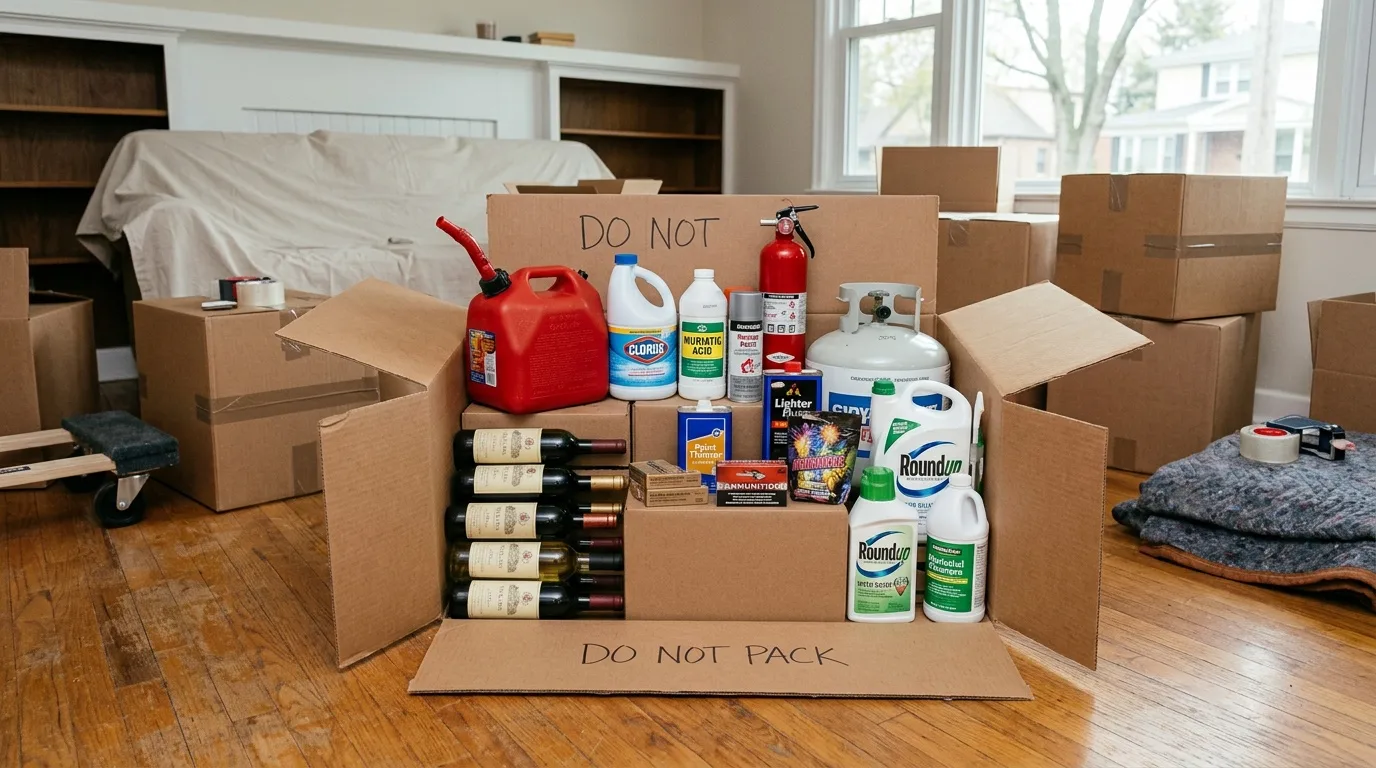
There are loads that a standard moving truck is not meant for. The reason is safety requirements, the law, or the need for special equipment. Federal rules forbid putting hazardous materials in a household goods shipment without telling the mover; the Federal Motor Carrier Safety Administration covers this in its consumer materials on moving.
Usually movers do not take:
- gasoline, solvents, paint and other flammable liquids;
- gas cylinders, including propane tanks;
- harsh chemicals;
- firearms and ammunition;
- perishable food without refrigeration;
- pets.
Even if such a load physically fits in the truck, the mover can turn the job down. Besides, some of the items listed are dangerous for the driver, the vehicle and everyone around them. With guns the practice is simple: most movers refuse firearms and ammunition, and owners carry them themselves under Illinois law, which requires a FOID card.
Leftover paint cans, old fuel and half-used chemicals that you do not plan to keep are better dealt with before moving day; anything that is just clutter can go out with junk removal before the move.
- Weapons and fireworks. Firearms, ammunition, fireworks, explosives and flammable substances stay out of the household shipment; most movers refuse them.
- Loose batteries. Do not pack separate batteries, power banks and damaged batteries without checking with the mover first.
- Medications. Do not hide prescription drugs among household things.
- Documents. Passports, certificates, diplomas, original contracts, credit cards and papers you may need right after arrival stay out of the general load.
Why Some Items Need Special Transport
An ordinary moving truck is built for standard household moves. Special transport is needed when the load must stay at a set temperature, needs reinforced tie-downs, protection from vibration or particular transport rules.
For example, food can spoil without a refrigeration unit, glass display cases can crack from vibration, and heavy equipment can damage the truck body without a reinforced floor and securing systems.
Perishable food
On a move within the city there is little point in hauling food to the new place. Fresh perishables are on the list movers will not take, and on a longer trip the problem only grows. So do movers move food? Sealed, non-perishable groceries are usually not a problem, but meat, dairy and anything that needs the fridge is better used up, given away or carried by you. The refrigerator itself is defrosted ahead of time and washed out, along with the microwave, the electric kettle and other small appliances, so you do not get dirty while loading them.
Houseplants
Do movers move plants? Many treat them as cargo that needs care rather than a refusal, though rules differ between companies and for some routes. If plants go in the truck, tape the stems of houseplants to the sides of the box with masking tape and cover the soil in the pots with paper or cardboard. This keeps the soil from spilling during the trip.
Put several pots in one box at once. Fill the gaps with packing paper or bubble wrap. In a cold month plants suffer in an unheated truck too, which is one of the points in our tips for moving in a Chicago winter.
Valuables, Cash and Documents: Keep Them With You
What to do with valuable items? Money, credit cards, documents, jewelry, family heirlooms and small expensive things are more sensible to carry yourself rather than send in the general load. The reason is plain practicality: if a passport, a birth certificate or a car title that you need urgently after arrival ends up in a box, getting it out of the load on the way will be almost impossible. Valuables are better photographed, put on a separate list and kept apart, not disguised as "miscellaneous belongings."
Set aside a separate box or bag for documents. Keep it close at hand so you can get the papers you need quickly. If you worry they could get wet or dirty, put them in waterproof bags.
Do not forget about cash, jewelry, coin collections, expensive accessories, antiques and art either. Valuables are better not hidden in a box of bedding in the hope that "no one will notice."
Gray Zones: Medications, Electronics and Batteries
Medications are one of the most frequent gray zones. A person honestly considers the medicine cabinet a personal thing, but the makeup of the drug, the quantity and the presence of a prescription all matter. Prescription drugs are better carried in the original packaging, with the prescription, and with you rather than in a box at the back of the truck.
Electronics on their own are usually not a problem if they are used personal things: a laptop, a monitor, a coffee maker, a printer, a TV, a food processor. But such equipment is worth listing in detail on the inventory, especially if it is expensive or has a serial number.
Batteries need separate attention. Lithium batteries count as dangerous goods in air shipping, and the rules for them depend on configuration, capacity and whether they are installed in a device. Even if your load goes by truck, a warehouse stop or further shipping can have its own restrictions. So power banks, spare batteries, cordless tools and devices with damaged batteries are always better agreed with the mover in advance. The same goes for anything you plan to put into storage between move-out and move-in.
Can Movers Move Dressers With Clothes in Them?
A frequent question is whether to empty dresser drawers for movers. If you are moving a dresser, empty the drawers first and move the clothes into boxes or bags: underwear, pajamas, T-shirts. Bulkier things such as jeans, sweaters and jackets are better packed separately.
Leaving heavy or fragile things inside wardrobes and dressers is, in fact, one of the common mistakes people make. Before the move, wash and dry all the clothes thoroughly: moisture and dirt can lead to odors and mold. Coats, jackets and blazers are better moved in special garment bags or in a wardrobe box. Later the box saves time, since clothes do not need ironing again, and it can serve as temporary storage while the new place has no closet. Soft clothing can also be spread between fragile items, for example wrapped around plates or picture frames.
| Can go | With care | Better not |
|---|---|---|
| Furniture | Mirrors | Gasoline and solvents |
| Boxes of belongings | Glass items | Gas cylinders |
| Appliances | Musical instruments | Hazardous chemicals |
| Office furniture | Antiques | Firearms and ammunition |
| Sports gear | Plants | Perishable food |
How to Tell Whether Your Load Fits a Regular Move
Before you book a truck it helps to assess a few parameters. Measure the length, width and height of the largest items. Decide whether extra packing is needed for fragile things, and whether you can carry things out and in on your own. The floor and the elevator matter too: no elevator affects both the time the work takes and the cost of the service.
If you are unsure, it is better to send the mover photos of the load and get a recommendation on the type of truck. When there is a lot of fragile stuff, professional packing and unpacking services remove part of the question.
- Addresses. The loading and unloading addresses.
- Volume and size. The rough volume of belongings and the dimensions of the largest items.
- Building. The floor number and whether there is an elevator.
- Extra work. Whether movers, packing or furniture disassembly are needed.
Common Customer Mistakes
When booking a move, people tend to make the same mistakes. They underestimate the volume and things do not fit in the truck. They do not pack glass, mirrors and appliances. They leave heavy or fragile things inside wardrobes and dressers, do not prepare appliances for transport, order a truck that is too small "to save money," and do not warn about heavy items or a missing elevator.
As a result the move takes longer, needs an extra trip or ends with damaged property. On a long-distance move out of Illinois each of these mistakes weighs more, because nothing can be fixed with a quick run back to the old address.
Send us your list and the questionable items, and ask the dispatcher what goes in the truck and what stays with you.
Get a Free Moving QuoteBottom Line
For most household tasks a regular moving truck works well: it is convenient for furniture, appliances, boxes of belongings and office property. Fragile items need careful packing, while hazardous, perishable and non-standard loads are better moved by specialized transport.
What movers will not move is not only the obvious stuff like guns or fuel. Far more often the trouble comes from categories that look ordinary at first: medications, batteries, documents, electronics, valuables and food. Split your belongings into safe, questionable and unwanted items, and do not put in the load what you can do without or what is simpler to carry separately. If move-in gets pushed back and things have to wait, see our notes on short-term storage when move-in is delayed.