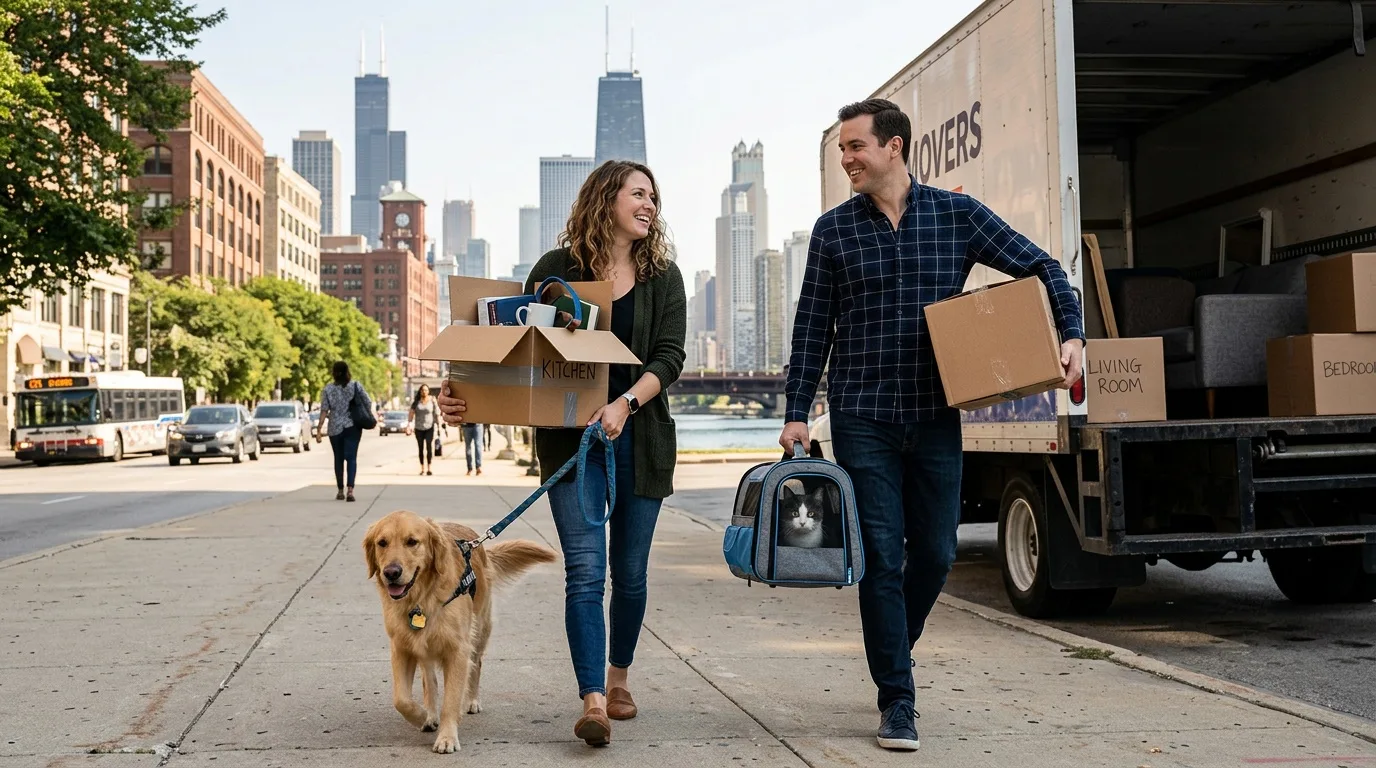
Moving brings a lot of hassle and worry. A change of scene is stress even for us humans, let alone for cats, creatures sensitive to any change. For them a new home is not just other walls but a completely unfamiliar world, full of strange smells and sounds. Dogs adapt faster, but they also read every bit of fuss around them. Below are tips on moving with pets in Chicago: what to do before the move, on moving day, on the road and in the first days.
Why Moving Is Scary for a Cat
Cats do not like change. Their world is built on stability, predictability and familiar smells. Their own territory, where everything is explored and marked, is a reliable fortress.
Any change of scene can break this idyll and throw the pet off balance. The unknown causes fear, anxiety, a wish to hide.
However hard the move is, we at least understand what is going on. But try explaining to a cat where the favorite windowsill and the warm corner in the kitchen went. Words won't help here, but there are other ways to support the cat so it gets used to the new home sooner.
Before the Move: Vet, Records and ID
Start with the vet. If the dog spent a lot of time outdoors, the chance it picked up fleas or ticks is fairly high, so it is important to treat the pet for parasites and deworm it. Even if no fleas, ticks or other parasites are visible, that does not rule them out. So don't skip the treatment, especially if another animal already lives at the new place.
Collect the vaccination records in one folder and keep it with you, not in a box on the truck. In Cook County the rabies tag comes with the rabies vaccination and is worn on the collar; details are on the Cook County Animal and Rabies Control page. Chicago also requires a city dog license, issued through the Office of the Chicago City Clerk. Suburbs have their own pet rules, so check them for the town you are moving to.
- Parasites: treat the pet for fleas and ticks and deworm it, even if nothing is visible.
- Records: keep the vaccination papers in a folder that rides with you.
- ID tag: put the new address and your phone on the tag before the move, not after.
- Microchip: change the address in the chip record too, so a found pet is brought to the new home.
A bright harness or collar also helps. If the pet runs off during the move, people are more likely to notice it and help. A GPS tracker raises the chances of finding it further.
Get the Carrier Ready in Advance
For animals, carriers are often linked only with unpleasant trips to the vet. Try to fix that. Put the open carrier in a room a few days or even weeks before the move, put soft bedding and a favorite toy inside. Now and then toss a treat in there to make the cat curious.
Soft, warm, smells good, and treats on top of that. It is easy to get used to. New positive associations will replace the old fears, and the trip to the new home will not frighten the pet as much. For a dog that travels in a crate, it is best to take the crate out at least a day before and leave it open, so the dog can sit or rest in it calmly.
Moving Day: A Quiet Room or a Sitter
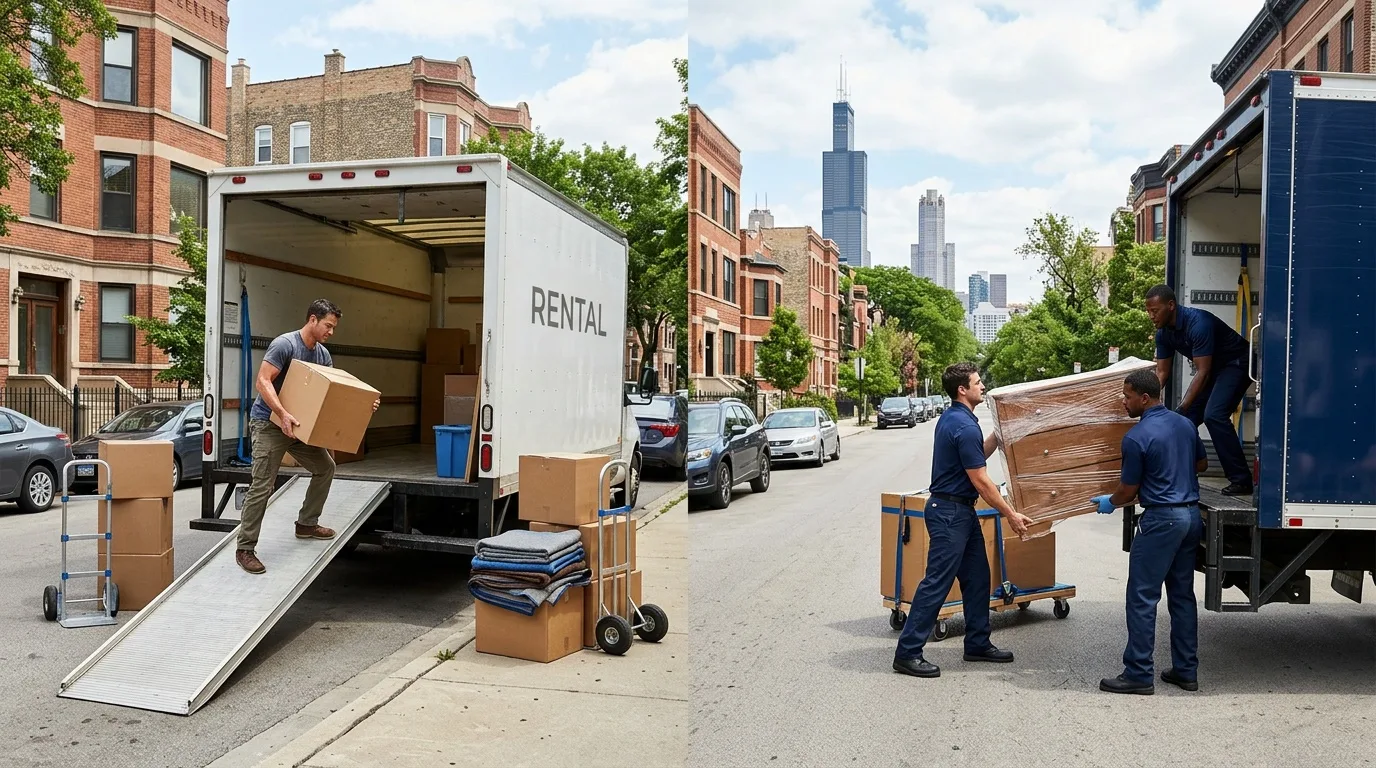
On moving day, while things are being loaded, close the cat in a quiet room together with its carrier, litter box, food and water, so it is not scared by the noise and strangers. Hang a sign on that door so nobody opens it by mistake. During loading the front door stays open and ramps are set up, and a frightened animal slips out in a second. If there is no room that can stay closed, it is easier to leave the pet with a sitter or with friends for that day.
Stability and the owner's behavior mean a lot in a dog's life. So first of all keep an eye on the daily routine and let the dog understand that you are near. During the move don't forget to feed the dog at the same time, walk it enough and leave time for play.
- Stay calm: any trip comes with some nerves, but try not to show them, or the dog will feel that something is wrong and you can't explain what.
- Pet's things go last: don't start packing with the dog's things; keep its favorite toys and a couple of your own things near it, a dog is calmer when it smells familiar smells.
- Come over now and then: pet the dog and play, talk in a calm voice, but don't push yourself on it too much; the point is to show that you are not going anywhere.
Packing is where most of the noise comes from, and the less of it happens on the day itself, the quieter the pet is. Part of the boxes can go earlier, or you can book packing and unpacking help from movers so the house is not turned upside down for a week.
When it is time to leave, pet the cat and only then close it in the carrier. Try to move it as smoothly as possible.
The Car Ride in Chicago Heat and Cold
Right before the trip, walk the dog well but don't feed it. Take fresh water for the road to offer it to the pet. If the dog rides outside a crate, take the gear along: leash and collar.
If you go by car, don't brake too sharply and don't turn on loud music. And never leave a pet in a parked car. In a Chicago summer the car heats up fast, in winter it cools down just as fast. If you move in January, read our tips for a Chicago snow day move as well. For long distance moves out of Chicago the same rules hold, only the stops for water and walks come more often.
| Step | Cats | Dogs |
|---|---|---|
| Days before | Open carrier with bedding, toy and treats | Crate out at least a day early |
| Moving day | Quiet room with carrier, litter, food, water | Same feeding time, walks and play |
| Before the ride | Pet the cat, then close the carrier | A good walk, no food, fresh water along |
| New home | One safe room, door opened later | Corner with bed, toys, food and water |
The First Days in the New Home
Take Along Everything That Smells Like Home
Smells are the key to a cat's calm. That is why you should take from the old apartment as many things as possible that smell of home and of you: blankets, pillows, your worn T-shirt (yes, really).
Owners who have moved with cats more than once notice that until everything is unpacked, the cat spends a lot of time in open bags and boxes. It is calmer for her there, it smells familiar, like home. When the things take their places, the whole new apartment starts to smell like home.
You can also rub the cat's face with a soft cloth and then run it along the corners of furniture and door frames at the pet's height. This way you help it "mark" the place with its own smell, and so protect it from possible intrusion by other animals.
Owners may think a move is a great reason to renew everything: buy a new bowl, a mat, a scratching post. But for a cat it is a shock. It loses at once not only the home but everything connected with it. So the bowl with a chipped edge, the old toy with a chewed ear and other familiar things must move with you.
Set Up a Safe Room
Don't let the cat explore the whole apartment right away. Choose a small quiet room, for example a bedroom or a study, and place all its things there in advance: in one corner the litter box, in another (away from the litter box!) the bowls with food and water, and somewhere between them everything else, the bed, the scratching post, toys.
Bring the cat in the carrier into this room, put it on the floor, open the door. Let it decide when to come out. For the first hours, maybe days, this room will be its shelter.
Some owners follow this scheme: first take things and furniture to the new place. There unpack and set up the basics, carefully group the unpacked boxes. Clean the floors and put the cat's things in place: bed, scratching post, filled bowls. This cuts the stress for everyone: cats don't like it when a room is too cluttered or, the other way round, empty, and a lost pet does not run under your feet while you unpack boxes. This works the same whether it is moving out of a Chicago apartment or a house move across Chicago.
Don't Hurry to Widen the Borders
When the cat settles in the safe room and starts showing interest in what is behind the door, you can start introducing the rest of the space. Leave the door open and let the pet pick the right moment to explore the new territory. Don't force it, don't drag it. Let it do this at a comfortable pace, always able to go back to its fortress.
Just watch how the cat settles. Sit so she can come to your arms and calm down. Don't close the passages where she wants to go to look around. If she wants to sit under the bed or look into the closet, let her.
- Hiding is normal: it is a reaction to stress and an unfamiliar place; the main thing is not to pull the cat out of its shelter by force.
- Access to basics: make sure it can reach food, water and the litter box, and has several safe hiding spots.
- Litter box: put it in a quiet, private place away from the bowls and use the familiar litter; you can add a little used litter from the old box.
- No scolding: if there was an "accident", treat the spot with a special cleaner so the smell does not draw the cat back.
- Vet: if the cat does not use the box for more than a day, refuses food or looks sluggish, see a vet to rule out medical causes.
A New Place for the Dog
When you reach the destination, right away set up a corner for the dog: its favorite bed, a couple of toys, bowls with access to food and water. Don't forget the daily routine and give the dog some time to adapt. At first the animal has to get used to the new surroundings and smells.
To make the dog feel comfortable, keep the same feeding and walking schedule it had before. If the pet is used to walking at 9 a.m., keep doing it, shifting the schedule slowly if needed. If the owner spent most of the time with the dog, try not to cut the time together sharply. In the first days it is better not to leave the pet alone in the new home for long.
How Long It Takes
It is all individual and depends on the pet's character, its past experience and how well you organized the move. An adult cat may need from one to several weeks to feel fully at home. Kittens usually adapt to a new home more easily.
Many cats need at least a few days. In this time a cat gets used to the unknown smells and sounds, figures out the room, picks spots for ambushes and naps, and calms down.
Moving with a cat takes patience. Remember: your pet depends on you fully. Give it a safe and calm setting in this hard period. Very soon it will purr again, lying in its favorite spot in the new home. For the rest of the day, the moving day checklist for Chicago renters and our complete guide to moving into a new house cover what is left.
The fewer strangers walk past the pet's door, the shorter the day feels for it. That is one more reason to plan the loading so it goes in one go.
Tell us about your move and the pets at home when you ask our local moving team in Chicago for a quote.
Get a Free Moving Quote