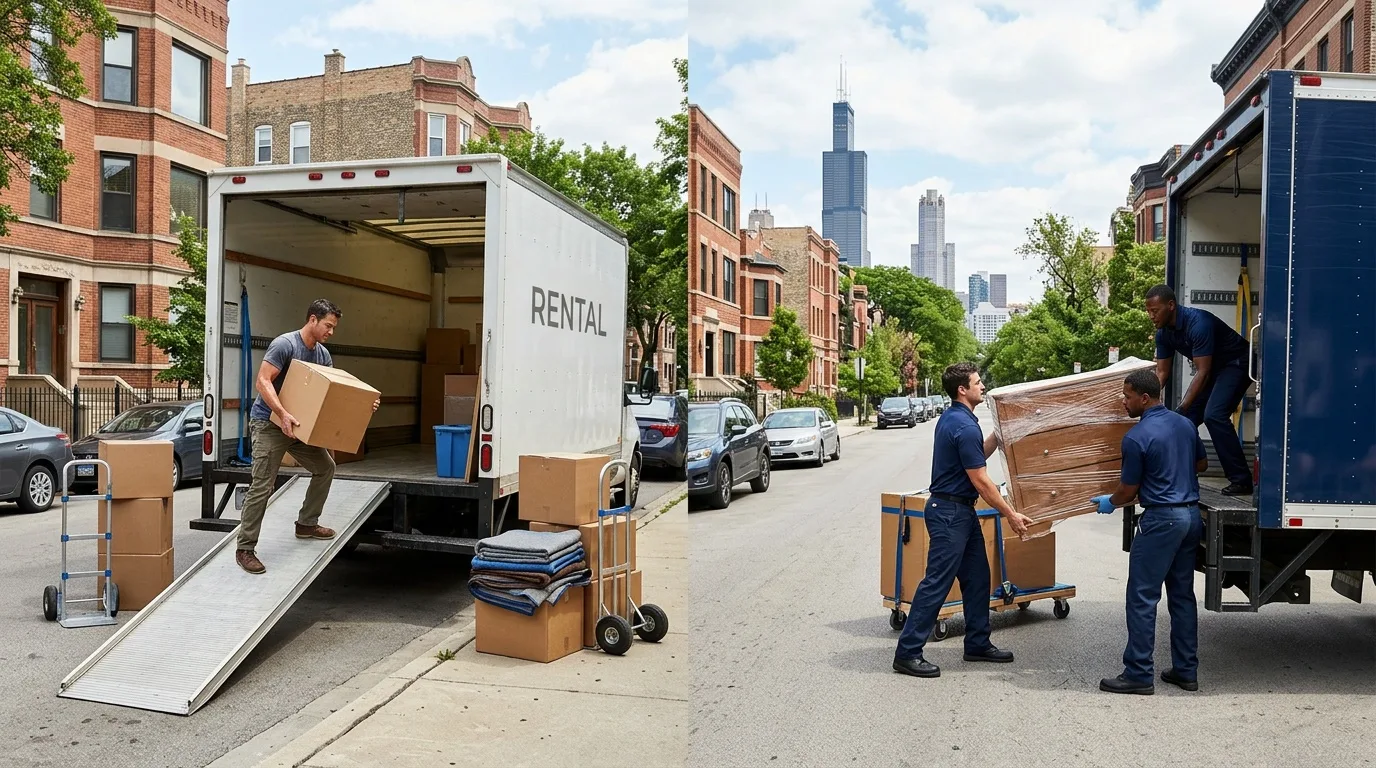
A refrigerator is big and heavy, and a washing machine is not much easier: both have their own rules when it comes to moving. Below we go through how to move a refrigerator during a move, whether it can be laid down to transport it, how long to wait before plugging it in, and how to get a washer and dryer ready so the drum and the hoses arrive in one piece.
What Manufacturers Say About Moving a Fridge
Most manufacturers, though not all, state in the manual that a refrigerator may only be transported upright. A tilt of up to 40 degrees is allowed. Transporting it lying down is technically possible, but it may void the warranty.
A refrigerator must never be laid on its door or on its back wall. On the back you can damage the compressor or the condenser grille. On the doors, the shaking loosens the hinges and the gasket suffers. For a truck, the height of the box matters: before you book one, check that your refrigerator fits in it standing up.
If you are buying a new refrigerator, it is better to order delivery to your home than to pick it up yourself. Store deliveries usually handle it properly.
How Long to Turn Off a Fridge Before Moving
Unplug the refrigerator a day before the move. Set a reminder so nobody in the family plugs it back in too early.
If there is a thick layer of ice in the freezer, defrosting will take longer. You can speed it up with a bowl of warm water placed inside. Pointing hot air at the walls is not a good idea.
Empty It, Dry It, Take the Shelves Out
Empty all compartments completely, including the shelves. Glass shelves can break. Wrap shelves and drawers separately in bubble wrap or foam and number them. Defrost the freezer and drain the water so mold does not appear, then dry the inside completely, so water does not get onto the components during the trip.
If your model has a water tank for the dispenser, check that no liquid is left in it. Otherwise, when the refrigerator is tilted, the water can get onto the control board. The water line and the ice maker connection are disconnected and drained at the same time, and it helps to photograph how the hoses and cables are connected so everything goes back the same way.
- A day ahead: unplug it and let the freezer defrost.
- Empty and dry: food out, shelves and drawers out, water drained, the inside wiped dry.
- Photograph the connections: the water line, the ice maker hose and the cables, so they go back the way they were.
- Doors closed: taped with painter's tape or held with straps.
Secure the Doors and the Compressor
Tape the doors with painter's tape so they do not open on the road or while you carry it. First wrap the cabinet in stretch wrap, then fix it with wide tape. On older models, secure the compressor so that it barely moves; pieces of foam, rags or old clothes will do for this.
Ideally, wrap the whole refrigerator in bubble wrap. If you do not have any, at least cover the places where the straps will go with a blanket or a throw. If the refrigerator is still in its factory packaging, no preparation is needed.
Can You Lay a Fridge Down to Transport It?
Transporting it lying down is bad for the compressor. If there is no other way, lay it only on the side named in the manual. For many frost-free models this is usually the left side, but check your documents.
The main rule is that the compressor must sit so that the discharge tube points up. Then the oil that has run out goes back into the compressor and is not carried through the whole circuit. The discharge tube connects the compressor to the condenser, the grille on the back wall. If it comes out to the left, the refrigerator is laid on its right side, looking at it from the back. Another way to tell, while the fridge is still running: touch the two tubes at the compressor on either side. The one that is hotter is the discharge tube. It can be very hot.
When the refrigerator travels on its side, it needs no extra securing, but the base under it has to be flat, or you can damage the side wall. Put blankets, foam or cardboard boxes under it so it does not slide and does not hit the walls of the truck.
Upright in the Truck
Standing upright is the ideal option. The refrigerator is pushed against one of the walls of the truck box and secured well. Trucks usually have tie-down points. It is better to use straps or ratchet straps rather than rope, because they hold the load more reliably. Put something soft under the straps, a blanket for example. Strap it at 2–3 points, use soft padding and leave a gap of 2–4 inches from other things. Do not put heavy items on top.
If the height of the box does not allow the refrigerator to go upright, it can be placed at a tilt. It must not rest on the edges of cabinets or other sharp items; a heavy sofa cushion works as a support. On a bumpy road the refrigerator can slide, since it stands on only two feet, and damage the things next to it. For long trips it is especially important to keep it upright. The safest maximum tilt is 40 degrees.
How to Move a Refrigerator Up Stairs and Through an Elevator
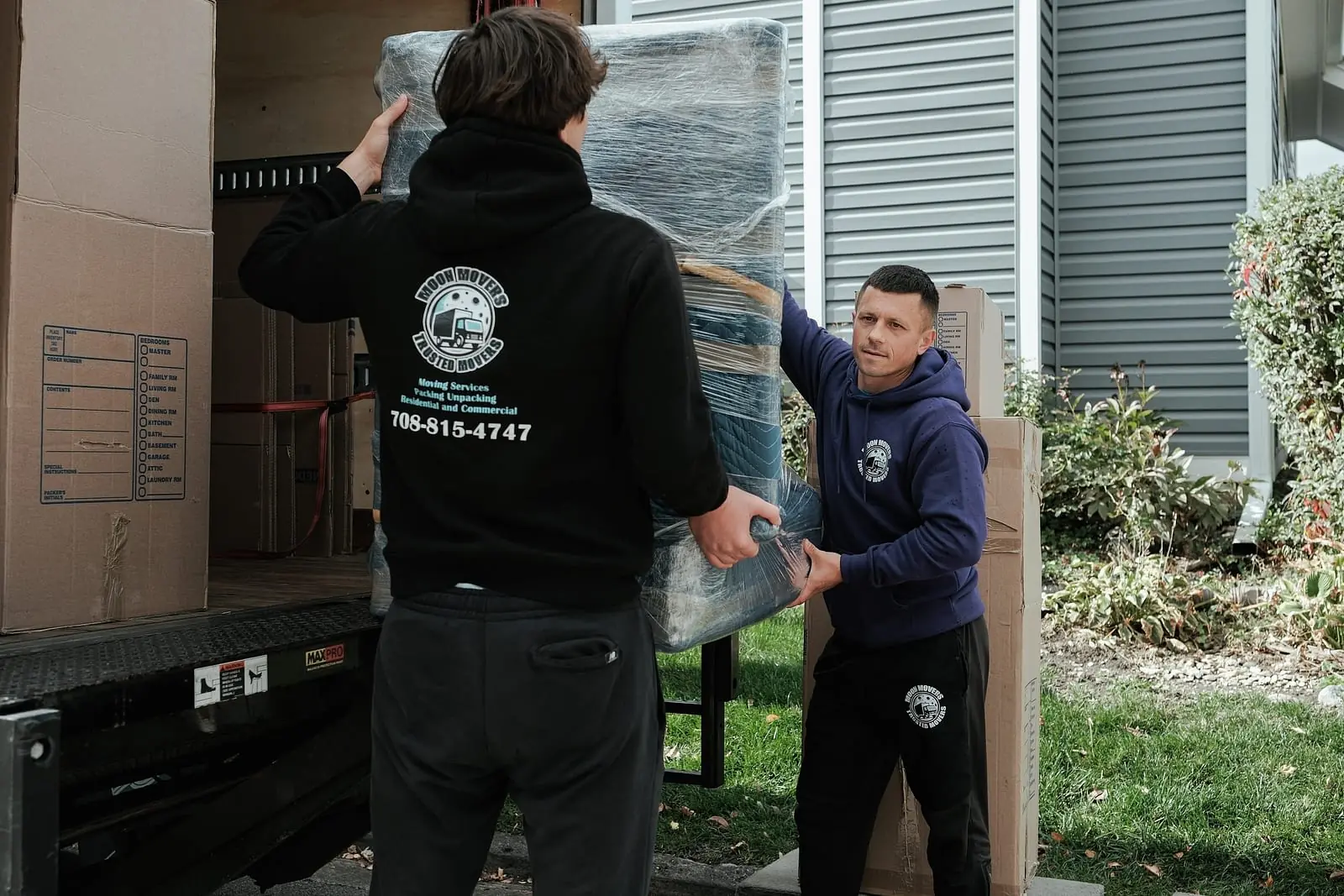
Carry the refrigerator by the cabinet. Do not hold it by the doors; they shift easily. Hold it at the bottom and by the top edge. Carry it upright, or tilted with someone securing the top: one person holds the bottom, the second steadies it at the top and sets the angle. An appliance dolly with straps makes this easier on stairs, and floor protection on the way out keeps the floors in one piece. There are more tips in our post on moving heavy furniture without scratching floors.
Check the size of the elevator. Not every refrigerator fits into a passenger elevator by height. If there is no freight elevator, the appliance can be tilted onto the side without the tubes. Watch that the elevator doors do not close during the move and pinch it. In a walk-up building, this is the kind of work where help with loading and unloading pays off.
How Long to Wait to Plug In a Fridge After Moving
Right after arrival, set the refrigerator upright and do not plug it in, so the oil can drain back into the compressor. You cannot switch it on right away. Manufacturers often recommend letting it stand for:
- up to 6 hours after upright transport;
- up to 16 hours after transport lying down.
For frost-free models, 8–12 hours is usually recommended if it traveled lying down. The figures differ from source to source, so the manual for your model is the most reliable guide.
| How the fridge traveled | Wait before plugging in |
|---|---|
| Upright | Up to 6 hours |
| Lying down | Up to 16 hours |
| Frost-free model, lying down | 8–12 hours as usually advised |
How to Move a Washer and Dryer
If the machine is new, it is enough to check that the factory box is intact and to load it carefully, preferably upright, as the manual says. Before moving it, make sure the box fits through the doorways, the elevator and the stairs. After installation, do not throw away the packaging and the bolts; keep them separately, for example in a zip-top bag.
If the factory box is still around, the machine is put into it, and the gaps at the sides are filled with foam or sheets of foam padding. If there is no box, you will have to do the securing yourself: think through the carry up or down the stairs and how it will sit in the vehicle.
Disconnect and Drain
Unplug the machine. Shut off the water supply, disconnect the fill hose and the drain hose. The point of this step is to rule out an electric shock and a flooded room. Leftover water can freeze in winter or damage the electronics, so drain it completely:
- Through the drain hose: lower its end into a basin or container below the level of the tub.
- Through the pump filter: put down a rag and unscrew the drain filter cap at the bottom of the front panel. Expect about 1–2 pints of water to come out. Do not lose the cap.
- Tilting the cabinet: after draining through the filter, carefully tilt the machine back so the remains in the pipes run into the tub and out through the filter opening.
Use painter's tape to fix the power cord, the drain hose and the fill hose to the cabinet. First take out the detergent drawer, dry it and tape it too, and secure the loading door. This protects the parts from damage and dangling while carrying. Winter moves in Chicago make the draining step more important, and our tips for a Chicago winter move cover the rest of a snow-day move.
Washer Transit Bolts
The drum hangs on springs and shock absorbers, so on a bumpy ride it can damage the suspension, the tub, the heating element and other parts. The factory bolts are the only fully reliable option: they fix the tub rigidly to the cabinet. They usually come with the machine. To install them, remove the plastic caps on the back wall and screw the bolts in all the way.
Without the bolts, you have to remove the back panel, put a sheet of foam between the tub and the inner wall, and fill the rest of the space with rags, foam padding, foam or old blankets. Then check for strange sounds when you rock it, and put the panel back. This method is not fully reliable. You have to work carefully so as not to damage the pipes and wiring. It is better than no securing at all, but careful transport is still needed. Makeshift materials are a last resort, so if possible order new bolts for your model.
- Bolts in, then bolts out: the transit bolts go in before the move and must come out before the first wash.
- Upright only: never transport it on its front panel or door — the gasket, the lock and the control panel can break.
- Gas dryer: disconnecting the gas line is a job for a licensed professional, not for the moving day crew.
- Old appliances: if you are not taking them, plan their junk removal in Chicago before moving day.
Wrapping and Position in the Truck
Wrap the cabinet in bubble wrap, corrugated cardboard or thick blankets and fix it with tape. Pay particular attention to the corners, the control panel and the parts that stick out. Use thick soft padding to avoid dents and scratches.
Upright is the minimal risk: it is the factory position, and the shock absorbers carry the normal load. On the back wall is a medium risk, acceptable if the drum is secured well; the pipes are at a small risk and water can get onto the electronics. On its side is a high risk: the detergent drawer can leak onto the board, or the drain pump can break. On the front panel or the door is a critical risk, so never transport it that way. In the truck the machine is set upright, sideways to the direction of travel, pushed against the wall and fixed with ratchet straps. Put cardboard under the straps so the cabinet does not get scratched. The machine must not shift even under hard braking.
Do Movers Move a Washer and Dryer?
The most reliable option is a professional company with movers, equipment for lifting onto the truck and a strap system in the truck. Carrying is done with lifting straps or with at least two people, holding the bottom of the cabinet. Do not pull by the hoses or the door. An average washer weighs about 130–175 pounds, so carrying it alone is not safe.
For a full home, appliances are part of the job in house moving in Chicago, and in a building with narrow stairs, in our apartment moving service. If the appliances only need to move to another room, that is furniture rearranging inside your home, a separate job.
Tell us what appliances are going, which floor and whether there is an elevator, and we will put together a quote.
Get a Free Moving QuoteSetting Up at the New Place
Do not connect the washer right away; the manual for your model says how long to let it stand. Removing the transit bolts is a required step. Do not switch the machine on until the bolts are out, or the shock absorbers, the suspension and the tub will break.
Connect the hoses to the water supply and the drain. Use a level to set the feet so the machine stands level in all directions; this prevents vibration on spin. Then run a quick cycle, for example rinse and spin, with no laundry and no detergent. Check that the connections do not leak, and that there are no strange noises or heavy vibration on spin. For the refrigerator, set it in place and let it stand before plugging it in, as described above. Appliances are only one line of the day, so keep our moving day checklist for Chicago renters close by.
Old machines that are not making the trip are better recycled than left at the curb, since old appliances contain heavy metals. If you are clearing them out along with old furniture, see furniture disposal before the move.