Winter movers in Chicago handle relocations complicated by ice, short daylight and sub-zero cold — most often booked by tenants whose leases turn over from December through February.
Frost changes the way materials behave, ice makes loading harder, and the short winter daylight in Chicago narrows productive work to about seven hours a day. Most people put off a move until spring, but the schedule does not always wait — a lease expires, a closing date falls in January, and the boxes have to go regardless.
Why Choose Winter Moving Services
Frost-Proof WrappingDouble film wrap keeps condensation off every surface.
Ice-Cleared PathwaysThe crew salts stairs and walkways before carrying, so no one slips under a heavy load.
The danger is not the frost itself but the condensation that forms when a cold device enters a warm room. LCD screens can degrade below about 14°F, and laptop hard drives are sensitive to the same temperature shock. The rule is straightforward: for every 18°F of difference between outside and inside, let the device sit for at least one hour before turning it on.
A mover carrying a refrigerator cannot see the ice underfoot and cannot react quickly if he starts to slide. On the morning of the move the stairs, porch and the path to the truck are treated with coarse salt or sand. The crew rechecks the surface every few hours and lays fresh material when it melts through.
Loading in cold weather takes roughly fifteen to twenty percent more time. The crew works in heavier clothing, every item gets extra wrapping, and the short daylight means the schedule is tighter.
Solid wood shrinks when moisture leaves it in the cold, then swells again in a warm room — if the change is sudden, joints can open and the finish can crack. Leather upholstery stiffens and may split. Both are wrapped in thermal blankets or thick bubble wrap first, then sealed in stretch film to hold warmth a little longer during the carry.
Most indoor plants begin to die when the air drops below about 40°F. During a winter move they ride in the heated cabin, never in the cargo bed. Each pot goes into a sealed plastic bag to trap warmth, and the carry from doorway to vehicle is kept as short as possible.
Demand drops in the cold months, so crews and trucks are easier to book and the dates are more flexible. Plan a little extra time for snow and ice on moving day.
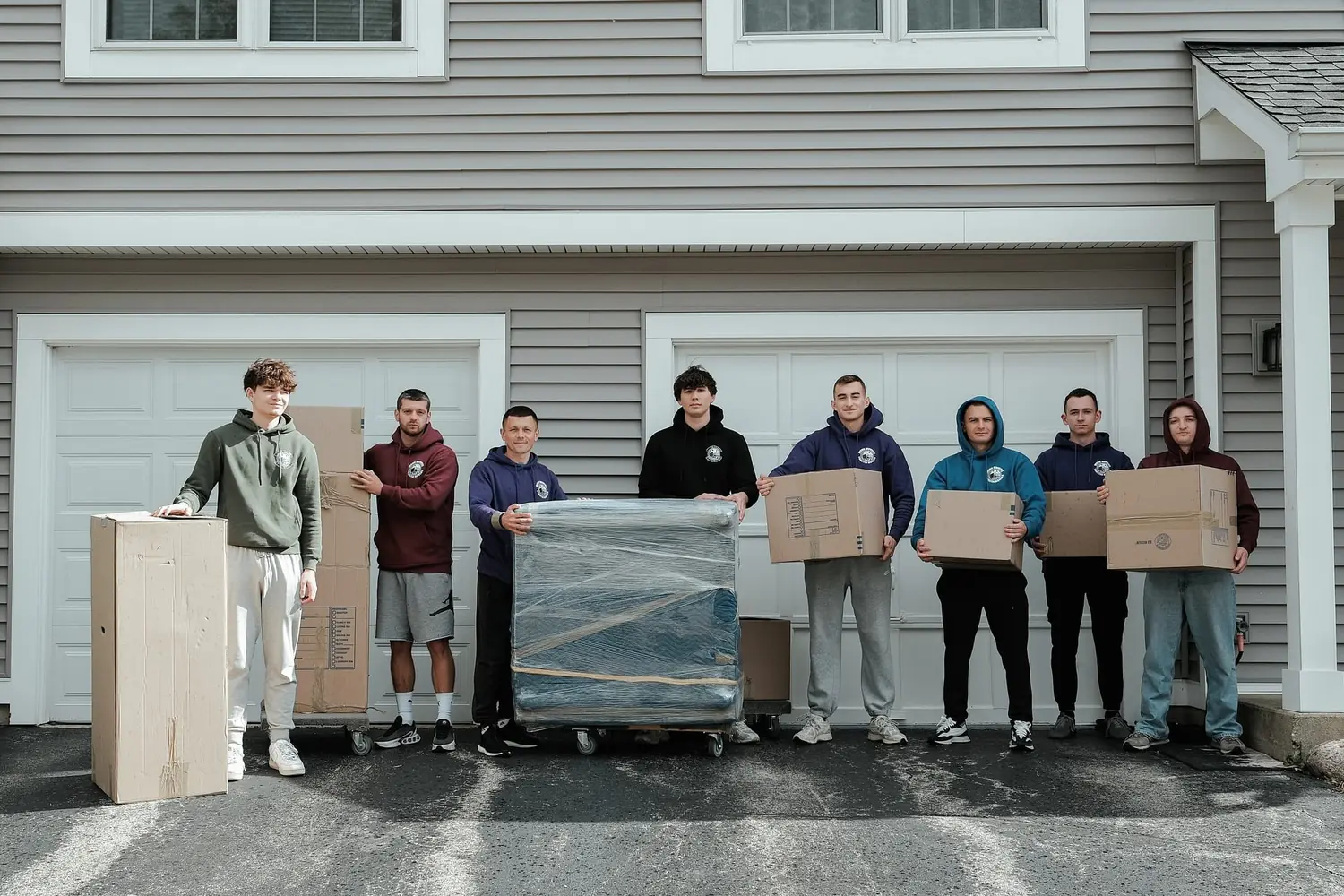
Winter Moves We Completed
1 / 4
Your Winter Move Process
Step 1 of 4
Cold-Weather Survey
The dispatcher checks the building entrance, stairway width and the distance to where the truck will park. The forecast is tracked from the week before — if heavy snow or an ice storm is expected, the date shifts rather than being risked. The written plan names the crew size, the truck and the hours of daylight available.
Weather forecast checked a full week ahead
Written plan with crew size and truck confirmed
Stairway, entrance and parking spot inspected on site
15–20 minDispatcher
Backup date set in case the forecast turns against the schedule
Winterized Packing
Soft furniture is wrapped in stretch film first so moisture never touches the fabric. Electronics go into thermal blankets — an LCD screen can crack if the glass cools below about 14°F. Boxes are sealed and wrapped in an outer layer of film for a second barrier.
Stretch film on every upholstered piece
Thermal blankets around all screens
Boxes sealed and wrapped in outer film
Fragile items double-wrapped before leaving the room
Ice-Safe Transport
The crew salts the path from the entrance to the tailgate, and the load is strapped in tiers so nothing shifts on a slippery road.
Path salted from the entrance to the tailgate
Electronics travel in thermal blankets
Load strapped in tiers against sliding
Crew rechecks the path surface for new ice every few hours
Cold-Weather Unloading
Items are carried in quickly so they spend as little time in the cold as possible. Electronics and wooden furniture are left to reach room temperature before plugging in or assembling — one hour of rest per 18°F of difference. The crew stays until you walk the rooms.
Fast carry from truck indoors
Appliances left to acclimate
No plugging in until warm
Walk-through with the crew before they leave the site
Moon Movers runs cold-weather moving crews across Chicago and the surrounding Illinois suburbs. Winter adds steps to every job — salted walkways and film-wrapped furniture — but the core process stays the same: survey, pack, load, deliver.
From wrapping electronics against condensation to timing the carry so nothing sits in the cold — every part of a winter move is planned around the forecast. If a winter closing slips, furniture can stay in storage for a few weeks. Our tips for getting through a snow-day move in Chicago cover the rest.